Which Primer Applicator Should I Choose?

TouchUpDirect offers primer options for every repair type and application method.
If you purchase a Preferred or Platinum kit, primer is already included—you don't need to choose separately. Essential kits include colorcoat and clearcoat only; add primer if your damage exposes bare metal or plastic.

2 in 1
Rating: 4.9
Door Dings
Stone Chips

Combo: 2-in-1 Pen + Brush

Starting at $21

Designed for flexibility: fix tiny chips with the pen and small scratches with the brush.

Shop Primer
Rating: 4.8
Small Scratches

Touch Up Brush

Starting at $17

Great for smooth coverage on small areas—perfect for scratches under a quarter in size.

Shop Primer
Rating: 4.8
Large Scratches
Repainting Panels
Painting Access

Aerosol Spray Can

Starting at $23

Great for large scratches and repainting projects—sprays evenly for a factory-finish look.

Shop Primer
Rating: 4.7
Door Dings
Stone Chips

Touch Up Pen

Starting at $17

Perfect for precise, targeted repairs on chips and nicks—without the mess.

Find Your Color Shop Primer
Rating: 5
Large Scratches
Repainting Panels

Professional Sizes

Starting at $54

Professional waterborne primer for spray guns in half-pint, pint, and quart.

Shop Primer

What Makes Waterborne Primer Better?

TouchUpDirect's Brush and Professional Size primers use advanced waterborne technology—a significant upgrade over traditional solvent-based primers.
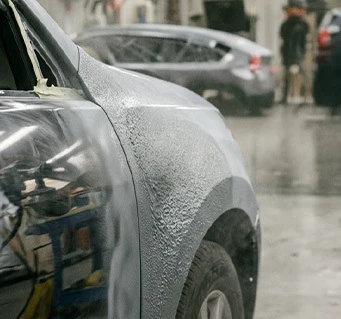
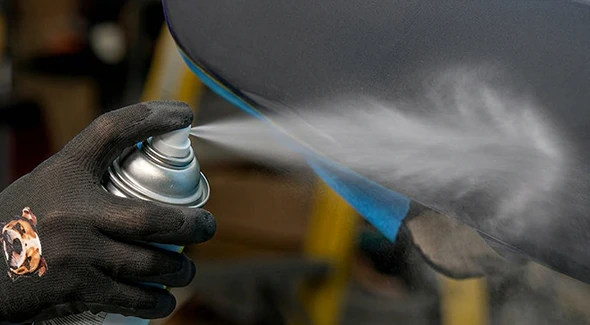
Technician spraying automotive primer onto a vehicle panel with an aerosol can

TouchUpDirect Primer Benefits

A lasting repair starts with primer. TouchUpDirect primer is built to do that job on any surface, and we match the formulation to the applicator so it performs the way it should, whether you're dabbing a chip or spraying a hood.
  • Bonds to all automotive substrates: Bare metal, aluminum, fiberglass, and plastic, including the flexible plastics on bumpers, mirrors, and trim.
  • A strong foundation for your color: Creates the bond between the surface and your colorcoat, so your paint adheres properly and lasts.
  • Corrosion protection as part of the system: Works with your colorcoat and clearcoat to protect bare metal from corrosion.
  • Built to last: A complete repair of primer, colorcoat, and clearcoat lasts 3-5+ years or longer when properly applied.
  • Ready when you are: Ready for colorcoat in 15-60 minutes, depending on the applicator.
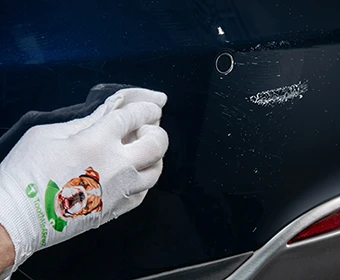
The right formulation for every applicator. Our Pen, Brush, Combo, and Professional primers are waterborne, with low VOC and soap-and-water cleanup for your tools. Our aerosol is a solvent-based urethane, which gives the best spray pattern from a can and levels to fill scrapes while it seals the substrate.

How to Apply Primer for Best Results

  1. Step 1: Surface Preparation (Critical)

    Technician spraying automotive primer onto a vehicle panel with an aerosol can
    1. Clean thoroughly – Remove all dirt, grease, wax, and contaminants
    2. Sand the area – Use 400-grit sandpaper to create tooth for primer adhesion
    3. Remove rust – Wire brush or sand until all corrosion is gone
    4. Clean again – Wipe with prep solution or alcohol to remove sanding dust
    5. Dry completely – Primer won't adhere to damp surfaces
  2. Step 2: Applying Primer

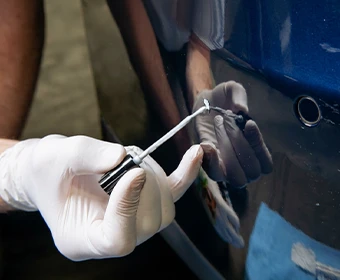
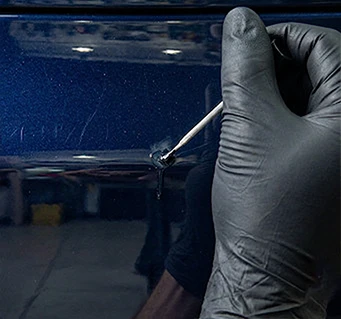
     Gloved hand applying primer with a fine brush to a small damaged area on a blue vehicle panel
    1. Shake thoroughly before use (1-2 minutes)
    2. Apply thin, even coats staying within the damaged area
    3. Don't overlap onto surrounding good paint
    4. Let each coat dry 15-20 minutes (2-3 coats recommended)
    5. Wait 30-60 minutes before applying colorcoat or wet sanding
  3. Step 3: Wet Sanding Primer (Recommended for Larger Repairs)

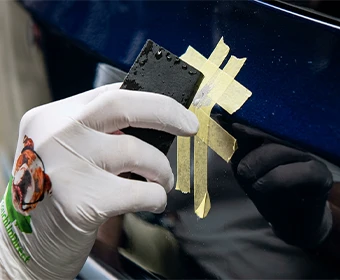
    Gloved hand wet sanding a masked primer repair on a dark blue vehicle panel

    For scratches larger than 1 inch, wet sand primer with 800-grit sandpaper to create a smooth foundation. Use light, circular motions and keep the surface wet. Stay within the primed area—don't sand onto surrounding paint. Wipe clean and let dry before applying colorcoat.

    Note: Small chips and scratches under ½ inch don't require wet sanding.

Common Primer Mistakes To Avoid

Helpful Tips

Common Primer Mistakes To Avoid

Helpful Tips
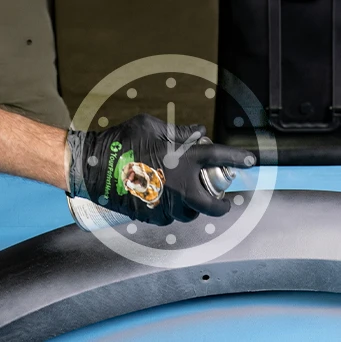
Gloved hand applying automotive primer with a clock graphic representing primer drying time

How Long Does Primer Take to Dry?

Small Scratches:

Touch-dry: 10-15 minutes, Ready for colorcoat: 15-30 minutes

Aerosol & Spray Gun Projects:

Touch-dry: 15-20 minutes, Ready for colorcoat: 30-60 minutes

Temperature and humidity affect drying time. Apply in 60-80°F with humidity below 85% for best results.

Black-gloved hand sanding a gray primed vehicle panel with a sanding block

Do I Need to Sand Primer?

Sanding primer is optional but recommended for larger repairs where smoothness is critical.

When to sand:

  • Large scratches or panel repairs
  • Aerosol spray applications
  • When you want a glass-smooth finish
  • If primer surface feels rough or uneven
Tips for Best Primer Application Results

Tips for Best Primer Application Results

Clean and sand the area before priming—contamination is the top cause of adhesion failure. Apply thin, even coats rather than one thick layer, using the right applicator for the job (brush for small repairs, aerosol for larger areas), and stay within the damaged area to avoid overlapping good paint.
Don't rush drying time between coats, and sand before applying colorcoat for the smoothest, most professional finish.

Frequently Asked Questions

  • Do I need primer for automotive touch up paint?

    You need primer if your damage exposes bare metal or plastic. Small chips that only damage colorcoat and clearcoat don't require primer. Deep scratches, rust removal, or any repair that goes down to raw substrate requires primer for proper adhesion and corrosion protection.

  • What's the difference between waterborne and solvent-based primer?

    Waterborne primer uses water as the carrier rather than solvent. Our touch up applicators and professional primers are waterborne. Our aerosol primer uses low-VOC solvent formula optimized for spray application.

  • Can I skip primer and just use extra coats of paint?

    No. Paint won't adhere properly to bare metal or plastic without primer. The repair will peel, chip, or rust underneath. Primer is chemically formulated to bond to substrate—paint is not.

  • How many coats of primer should I apply?

    Apply 2-3 thin coats for most repairs. Deep damage or rust repair may need 3-4 coats. Never apply primer so thick that it runs or drips—multiple thin coats are always better.

  • Do TouchUpDirect kits include primer?

    Preferred and Platinum kits include primer, colorcoat, and clearcoat. Essential kits include only colorcoat and clearcoat—add primer separately if needed. Use our kit selector or contact support if unsure which kit is right for your repair.

  • Can I apply colorcoat immediately after primer?

    For touch up brush and pen primer, wait 15-30 minutes minimum. For aerosol primer, wait 30-60 minutes minimum. Primer must be fully dry to the touch before applying colorcoat. Painting too soon can trap solvents and cause bubbling or poor adhesion.

  • Will primer prevent rust?

    Primer alone won’t prevent rust. It helps seal bare metal from moisture and oxygen, preventing rust formation. The entire TUD paint system works together to prevent corrosion, provide an exact color match, and offer an EOM level finish. However, you must remove all existing rust before applying primer—primer can’t stop rust that’s already started. Use a wire brush or sand until all corrosion is gone, then prime immediately.

  • Can I use your primer on plastic bumpers?

    Yes. TouchUpDirect primer is formulated for all automotive substrates including metal, aluminum, fiberglass, and plastic. It provides excellent adhesion to both hard and flexible plastics used in bumpers, mirrors, and trim.

  • Why does my primer look rough or textured?

    This is normal, especially with aerosol application. Slight texture (orange peel) is common and will be covered by colorcoat and clearcoat. For a glass-smooth finish, wet sand dried primer with 800-grit sandpaper before applying colorcoat.

  • How long does primer last on a car?

    When properly applied and covered with colorcoat and clearcoat, primer-based repairs can last 3-5+ years or longer. The complete paint system (primer + colorcoat + clearcoat) provides maximum durability and weather resistance.

  • Free Shipping

  • Amazing Customer Support

  • Color Match Guarantee